Cabinet Secretary for Information, Communications, and the Digital Economy, Hon. William Kabogo, has officially endorsed Jomo Kenyatta University of Agriculture and Technology (JKUAT) Industrial Park as one the country’s premier national hub for assembling digital devices. The endorsement came during a high-level working visit on April 9, 2026, where the CS inspected ongoing assembly operations and expressed strong confidence in JKUAT’s capacity to support Kenya’s ambitious digital transformation agenda.
Hon. William Kabogo, has officially endorsed Jomo Kenyatta University of Agriculture and Technology (JKUAT) Industrial Park as one the country’s premier national hub for assembling digital devices. 
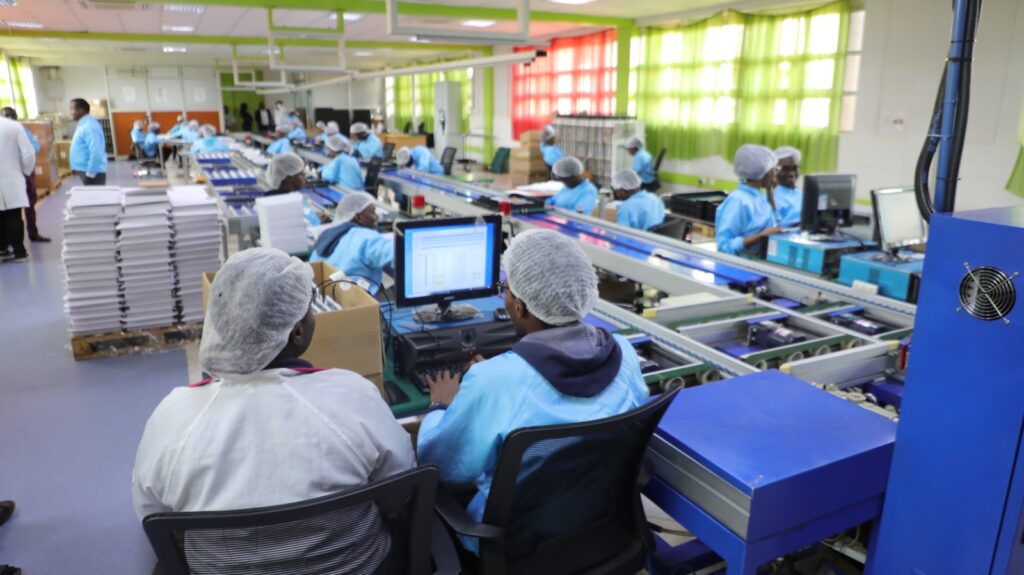
The government has contracted JKUAT-IP to assemble 3,000 digital devices, primarily computers, as part of a broader initiative to establish digital hubs in all 1,450 wards across Kenya. Each hub will be equipped with between 50 and 100 devices to provide communities with access to ICT services, digital skills training, and opportunities for youth employment in the digital economy. The university-led initiative represent a significant step toward local manufacturing of digital hardware, reducing reliance on imports and creating skilled jobs for Kenyan youth. The CS highlighted JKUAT’s proven track record in delivering major government projects, positioning the institution as a reliable partner in building what he termed the “Digital Superhighway.” “We have seen JKUAT’s excellence in action on major national tasks and that proven capacity is exactly why we trust the institution to serve as a central pillar in the government’s mission in building the digital superhighway,” Kabogo stated during the tour.
Kabogo stated that JKUAT’s excellence in action on major national tasks with proven capacity is exactly why we trust the institution to serve as a central pillar in the government’s mission in building the digital superhighway
The project integrates seamlessly with student training at JKUAT. Learners are attached directly to the assembly lines, gaining hands-on experience in electronics assembly, quality control, and production processes. This practical exposure is designed to enhance employability and build a skilled workforce capable of scaling local digital manufacturing.
The project integrates seamlessly with student training at JKUAT where Learners are attached directly to the assembly lines, gaining hands-on experience in electronics assembly, quality control, and production processes. 
Vice Chancellor Prof. Victoria Ngumi expressed pride in the university’s contribution, affirming JKUAT’s readiness to expand production with adequate government support. The initiative aligns with Kenya’s broader vision of fostering innovation, industrialization, and digital inclusion under the Bottom-Up Economic Transformation Agenda.
Vice Chancellor Prof. Victoria Ngumi expressed pride in the university’s contribution, affirming JKUAT’s readiness to expand production with adequate government support. 
Prof. Kibet Langat, the Managing Director JKUAT Industrial Park emphasized the park’s strategic importance adding that it is not only more than an assembly site but also a catalyst for Kenya’s technological sovereignty. With this national mandate, we are not only meeting immediate device needs for the digital hubs but also nurturing innovation ecosystems that will spawn home-grown tech solutions, create sustainable jobs, and position our youth at the forefront of Africa’s digital revolution,” he said.
Prof. Kibet Langat, the Managing Director JKUAT Industrial Park emphasized the park’s strategic importance adding that it is not only more than an assembly site but also a catalyst for Kenya’s technological sovereignty. 
We are committed to delivering high-quality devices while expanding our capacity through research and industry linkages.
This underscores a growing partnership between the Ministry of Information, Communications, and the Digital Economy and Kenyan universities. By leveraging academic institutions for device assembly, the government aims to accelerate the rollout of digital infrastructure while simultaneously investing in human capital development. JKUAT Chair of Council, Dr. James Micah Onsando, who also serves as a Board Chair of the JKUAT Industrial Park, reaffirmed the Park’s capacity to scale up production beyond current levels. He noted that the facility is well-positioned to meet increasing national demand while supporting the country’s broader industrial and economic growth objectives.
JKUAT Chair of Council, Dr. James Micah Onsando, who also serves as a Board Chair of the JKUAT Industrial Park, reaffirmed the Park’s capacity to scale up production beyond current levels.
As Kenya pushes toward its digital economy goals, JKUAT’s role as the national assembly hub exemplifies how universities can drive practical innovation. The facility’s integration of education, research, and industrial production offers a replicable blueprint for other institutions.
As Kenya pushes toward its digital economy goals, JKUAT’s role as the national assembly hub exemplifies how universities can drive practical innovation. 
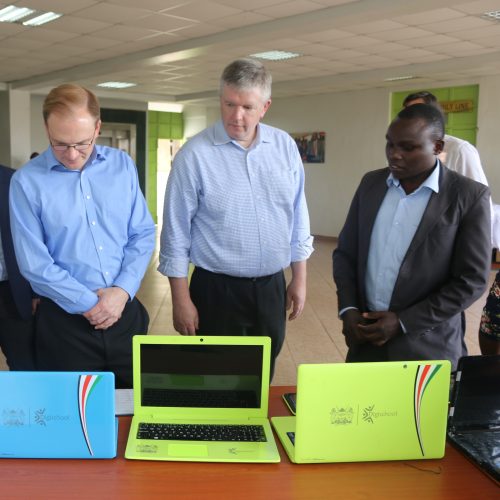
V.C. JKUAT and Other Government Officials Interacting With the Learner Devices
Introduction of Learner Devices to Class I pupils in Public Primary Schools Under the Digital Literacy Programme Project
A Visit by Microsoft Officials to see Industrial Park and its Products
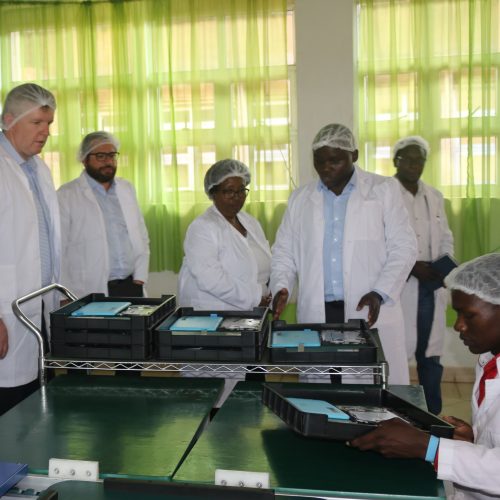
M.D. Industrial Park demonstrating the Assembly of devices to guests
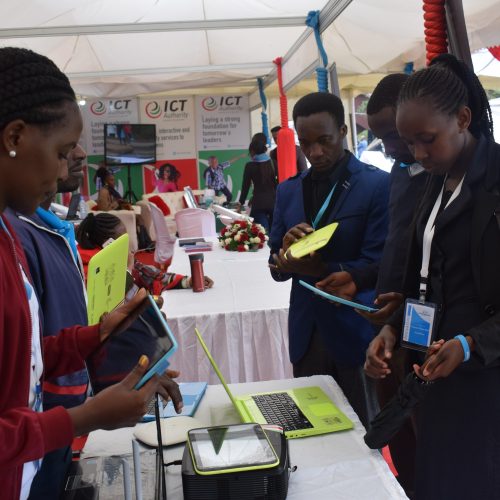
Our Team Showcasing the Company's Products at an ICT Authority Event
Our Team Showcasing the Company’s Products at an ICT Authority Event